Annual production capacity
0.2-1 GWh/yr
Bankability influence
Neutral
How the supplier's financials affect its products' bankability
Company Size
Small
1-300 headcount
Vertical integration
Highest
In-house production of key components
Company Overview
CESC makes energy-storage systems. It has 260,000 square meters of production space and 10 GWh of annual capacity, supplies integrated ESS for residential, commercial, industrial, and utility-scale use, supports them with in-house battery and energy management systems, and belongs to a parent group with more than 25 years of experience in the energy sector.
Headquarters
Wiesbaden, Germany
Legal entity
CESC GmbH
IPP / offtaker customers
Austria, Greece, Macedonia, Philippines
Integration footprint
China
Adjacent product lines
residential storage, smart microgrids, cloud platform, O&M / services
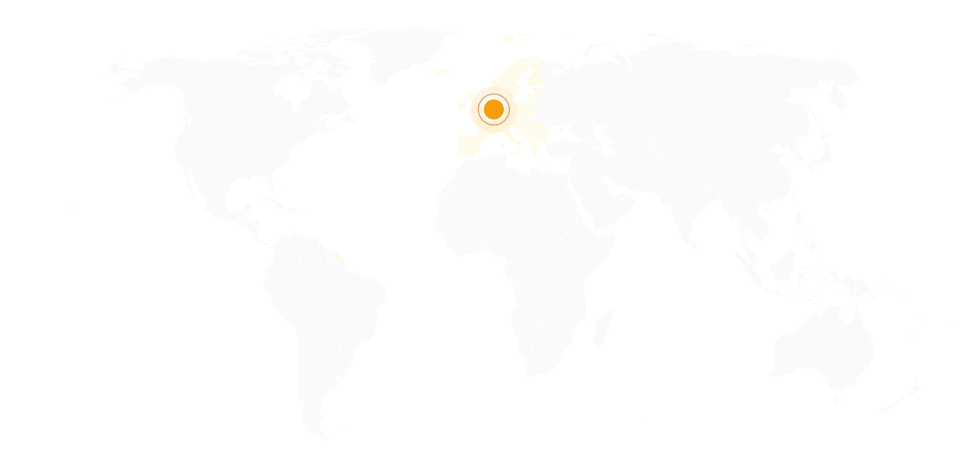
Moderate presence in Europe; no recorded presence in North America, Latin America, Central Asia & CIS, Middle East & North Africa, Sub-Saharan Africa, South Asia, East Asia, Southeast Asia, and Oceania.
Cell & System Architecture
CESC’s BMS supports battery monitoring, active cell balancing, and protection through an integrated architecture that spans the cell, local system, and cloud.
Recent Developments
CESC launched Mercury 418, a 418 kWh all-in-one, liquid-cooled BESS for commercial and industrial use. Its 800 V direct-connect design cuts transformer costs, simplifies grid interconnection, scales to 8.36 MWh, and targets 10,000 cycles.
Market Price Estimate
No modelled range is published for this product yet.
Financial Health
Derived from the five sub-metrics below: all five neutral.
Reference Project
Management Systems (ISO)
The BESS vendor possesses the ISO certificates Quality Management (ISO 9001), Environmental Management (ISO 14001), Occupational Safety (ISO 45001), Information Security (ISO 27001) and Energy Management (ISO 50001).
ESG & Sustainability
CESC has an MSCI ESG rating of BB, Ernst & Young assures selected GRI KPIs, and the company targets carbon neutrality by 2070. It screens all new suppliers against ESG criteria, reports 100% ash use, reuses more than 12,000 off-circuit meters, and recycles treated water at generation facilities.
The rest of this vendor profile is for members
Create a BESSBASE.com account to open and compare full vendor details. No subscription fee. Access is immediate.
Compare to Other Vendors
All vendors| Vendor | Tier | HQ | Capacity | Compare |
|---|---|---|---|---|
| Tier-2 | Wiesbaden, Germany | 0.2-1 GWh | This vendor | |
| Tier-2 | Nürtingen, Germany | 2-20 GWh | ||
| Tier-2 | Stuttgart, Germany | 0.2-1 GWh | ||
| Tier-2 | Kerzenheim, Germany | 0.2-1 GWh | ||
| Tier-2 | Iggensbach, Germany | 0.2-1 GWh |
How to Read the CESC Vendor Page
This profile of CESC is assembled exclusively from public data to support early-stage screening.
BESSBASE analyzes the published financials of CESC on a quarterly basis to produce the Financial Health Scorecard. The scorecard for CESC is Neutral, because the BESSBASE Research Team does not have the estimates for non-public BESS manufacturers.
The Financial Health Scorecard is not a direct proxy for the bankability rating for CESC energy storage products. It may form one input among others in a bankability assessment, or it may not, depending on the lender, project structure, and other factors.
Tier-2 is assigned when the BESSBASE Research Team cannot validate from public data that the energy storage products of CESC robustly and repetitively obtain external financing from major financial institutions.
The BESSBASE Vertical Integration scorecard for CESC is Highest. It reflects the assessment of the supplier's production capabilities of the key Technology & Supply Chain components: PCS, Energy Management Software, Battery Management Software, and Battery Cell.
Always confirm these terms and technical specifications directly with the vendor and project stakeholders. Reflect all agreed-upon details in the legal agreements before making any investment decisions.


