Annual production capacity
20+ GWh/yr
Bankability influence
Neutral
How the supplier's financials affect its products' bankability
Company Size
Middle
300-1000 headcount
Vertical integration
Minimal
In-house production of key components
Company Overview
Founded in 2011 and based in Wilsonville, Oregon, ESS makes long-duration iron-flow battery systems for commercial and utility-scale energy storage. It started with iron-flow batteries that use earth-abundant materials and last a long time, and it now also includes sodium-ion technology through an announced 8.5 GWh partnership with Alsym.
Headquarters
Wilsonville, United States
Legal entity
ESS Tech, Inc.
Integration footprint
United States
Adjacent product lines
Bridge™, Horizon™, Command™
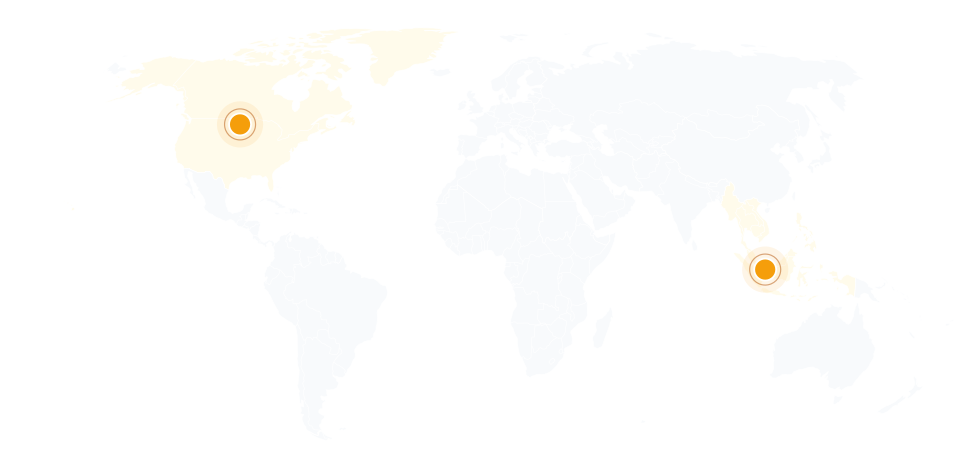
Moderate presence in North America and Southeast Asia; no recorded presence in Latin America, Europe, Central Asia & CIS, Middle East & North Africa, Sub-Saharan Africa, South Asia, East Asia, and Oceania.
Cell & System Architecture
Cell chemistry
Recent Developments
ESS launched its Bridge modular sodium-ion BESS and is speeding up US-made development, with early deals nearing $1 billion and an 80 MWh California project planned under a letter of intent with Juniper Energy.
ESG & Sustainability
ESS says its iron-based battery chemistry is largely recyclable. The company also runs conflict-minerals supply chain due diligence with the Responsible Minerals Initiative reporting template and supplier surveys.
Market Price Estimate
No modelled range is published for this product yet.
Financial Health
Derived from the five sub-metrics below: 4 suboptimal · 1 healthy.
Corporate & Listing
Reference Project
The rest of this vendor profile is for members
Create a BESSBASE.com account to open and compare full vendor details. No subscription fee. Access is immediate.
Compare to Other Vendors
All vendorsHow to Read the ESS Vendor Page
This profile of ESS is assembled exclusively from public data to support early-stage screening.
BESSBASE analyzes the published financials of ESS on a quarterly basis to produce the Financial Health Scorecard. The scorecard for ESS is Neutral, based on the cumulative score of five components: Balance-sheet strength Suboptimal, Profitability Suboptimal, Leverage Suboptimal, Liquidity Healthy, and Cash-flow risk Suboptimal. The BESSBASE Research Team estimates all five components from the latest public financial statements of ESS, assessed relative to peers and corporate structure.
The Neutral score indicates that the BESSBASE Research Team does not find a clear basis for either a favorable or an unfavorable view on the manufacturer's financials. The Financial Health Scorecard is not a direct proxy for the bankability rating for ESS energy storage products. It may form one input among others in a bankability assessment, or it may not, depending on the lender, project structure, and other factors.
Tier-2 is assigned when the BESSBASE Research Team cannot validate from public data that the energy storage products of ESS robustly and repetitively obtain external financing from major financial institutions.
The BESSBASE Vertical Integration scorecard for ESS is Minimal. It reflects the assessment of the supplier's production capabilities of the key Technology & Supply Chain components: PCS, Energy Management Software, Battery Management Software, and Battery Cell.
Always confirm these terms and technical specifications directly with the vendor and project stakeholders. Reflect all agreed-upon details in the legal agreements before making any investment decisions.


